The 2026 Class includes Women’s division inductees Amber Sinicrope, Anne (Mercier) Boulanger, Octavia ‘Opi’ Payne, Rohre Titcomb, and Leila Tunnell. These new inductees are joined by the Open division inductees Ashlin Joye, Jeff Graham, and Mac Taylor. Also included in the Class of 2026 are Mixed division inductees, Alicia Carr, Josh ‘Shwa’ Hemmesch, James Hron, and Sean Murray.
“We are thrilled to welcome this impressive class of new members to the Ultimate Hall of Fame,” said Suzanne Fields, Ultimate Hall of Fame Administrator and Vetting Committee chair. “Their stature and competitive excellence are renowned throughout our community. We look forward to honoring them at the next Hall of Fame Induction ceremony to take place during the 2028 USAU National Championships where we’ll be honoring the 2024 through 2028 Classes of Hall inductees.”
To be inducted into the Ultimate Hall of Fame, candidates must complete three steps. The first stage involves “peer voting,” where nominated player candidates are reviewed and ranked by a group of players from their own playing era, which in 2026 was focused on the period of 2010 to 2018. Both Hall members and members of the ultimate community participated in the solicitation and vetting of candidates to identify a final slate. The second stage involved winnowing the field to a finalist slate of player candidates through a review of the peer voting results and written applications solicited by the Vetting Committee. The slate of 28 player candidates was announced in the Call to the Community, which requested input from the ultimate community at-large. The final stage involved two rounds of voting for the candidates by the full voting committee composed of the Vetting Committee and the eligible player and contributor members of the Ultimate Hall of Fame. Since 2018, voting has been segmented by division for player candidates, with Women’s division Hall members voting on Women’s division player candidates, Open members voting on Open player candidates, and the Mixed division members voting on their candidates. Inductees must receive an affirmative vote by at least two-thirds of the eligible Hall voters.
The Hall’s 2026 selection process will be completed in mid September with the consideration of the 5 finalists in the Contributor-Product Innovation category. Stay tuned for additional updates!
The Class of 2026 is the 23rd class inducted into the Ultimate Hall of Fame, which was established in 2004 to honor exceptional ultimate players and contributors whose accomplishments are worthy of recognition and merit acknowledgement by their peers.
HALL OF FAME CLASS OF 2026
WOMEN’S DIVISION
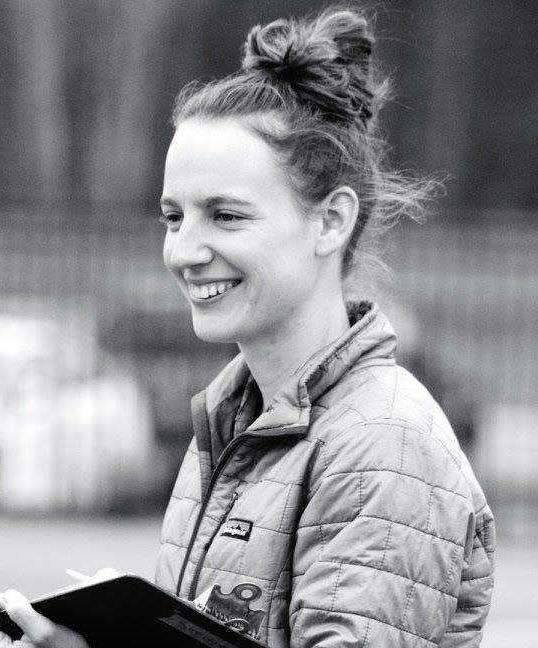
Amber Sinicrope (Roslindale, MA)
Amber Sinicrope spent two decades as one of the most respected and accomplished players in ultimate. Getting her start on the club scene as a 16-year-old, Sinicrope became a cornerstone of Boston Brute Squad’s success, helping lead the team to three national titles (2015, 2016, and 2019) and three runner-up finishes (2009, 2017, and 2018). Before her debut with Brute Squad, Sinicrope was a standout at Amherst Regional High School. She went on to play college ultimate in both Division I and Division III at the University of Wisconsin and Smith College, respectively. Throughout her career, Sinicrope had an extraordinary 18 Club Nationals appearances between the women’s and mixed divisions. Consistently recognized as one of the best in the country, Sinicrope has represented Team USA seven times at multiple levels across WJUC, WUGC/WUC, WBUC, and WMUC. Across these, and also including club Worlds appearances, she has earned four gold, three silver, and three bronze medals on the international stage.
Renowned for her relentless work ethic, shutdown handler defense, and precision throwing, Sinicrope excelled as both a defensive stopper and offensive playmaker. Her reputation shines through in the way she summarizes the sport: “ultimate is about embracing the grind in the pursuit of a common goal with your teammates—and finding joy in it, even in the hardest moments.” Whether anchoring Brute Squad’s defense with disruptive persistence or quarterbacking its offense with her low-release breaks, she was known for elevating teammates and consistently delivering in the sport’s biggest moments. Her achievements on the field were matched by her character off it, earning recognition by her peers with the Kathy Pufahl Spirit Award in 2017.
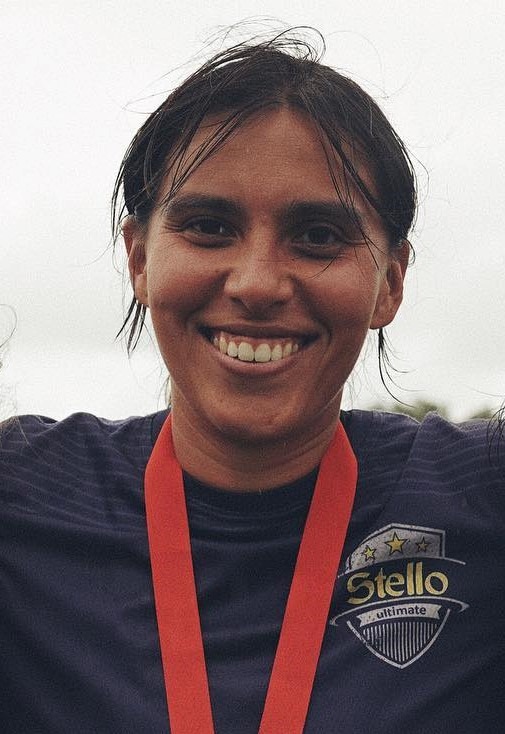
Anne (Mercier) Boulanger (Ottawa, Ontario)
Anne (Mercier) Boulanger was one of the most dominant and complete handlers of her generation, excelling as both an offensive quarterback and game-changing defender. Beginning her elite club career at just 16 years old with the Capitals, she quickly became a cornerstone of top teams in Canada and the United States, earning a reputation for exceptional throwing range, athletic bids, strategic field vision, unflappable leadership, and competitive poise.
With elite club experience already under her belt, Boulanger headlined the University of Ottawa’s multiple appearances at USAU Nationals where she was recognized as the Callahan Award runner-up in 2008. Boulanger helped lead Capitals to USAU Club Nationals finals appearances in 2009 and 2010 and then played a central role in D.C. Scandal’s back-to-back national championships in 2013 and 2014. Recruited specifically to help Scandal take its game to the next level, Boulanger created a blueprint for how international players could make an impact in the U.S. Club Series. Internationally, she represented Team Canada for more than a decade, earning medals at the World Games, WUGC, and WJUC, while serving as captain multiple times.
Universally respected as an explosive athlete, Boulanger complemented her footwork in the handler space with powerful throws that attacked any mark. Asked to describe her game, Boulanger said teammates knew her as a player that was “calm, competitive, and leading by example…with a commitment to always be better.” Her competitive nature and focus helped her elevate every team she joined and left a lasting impact.
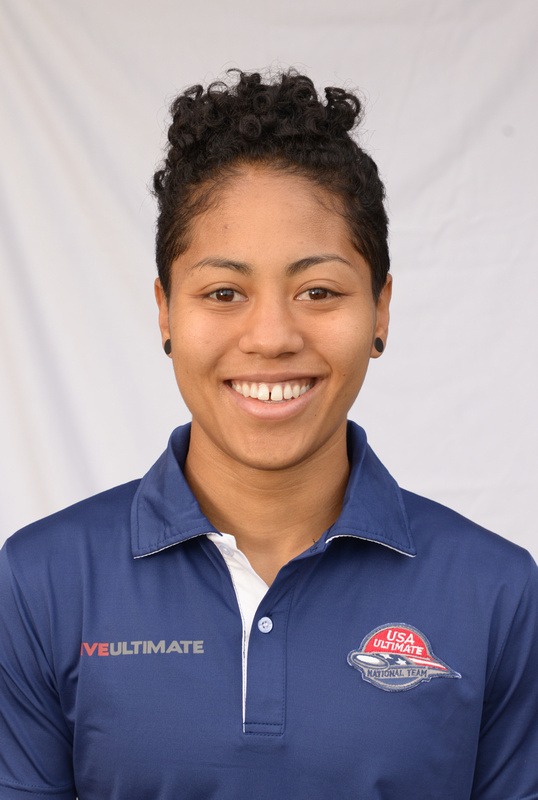
Octavia ‘Opi’ Payne (Oakland, CA)
Octavia “Opi” Payne was one of the most dynamic and dominant players in ultimate history, excelling as both a lockdown defender and game-changing offensive threat. Payne was a centerpiece of D.C. Scandal’s back-to-back national championship teams in 2013 and 2014, anchoring the D-line with highlight reel blocks and a powerful offensive attack on the turn. Payne later helped lead Denver Molly Brown to two semifinals appearances before joining San Francisco Fury and earning three more USA Ultimate Club National Championships. Payne’s 11-year run stretching from 2012 through 2023 of making the semifinals or better while on three different club teams across the country cemented a legacy of sustained excellence through multiple eras.
Widely regarded as one of the sport’s premier defenders, Payne could neutralize opponents of any position or style while also serving as a powerful distributor and playmaker. Known for shoulder-high layout Ds, unstoppable changes of direction, and huge throws, Payne was a match-up problem for every opponent their entire career and raised the bar for athletic aspiration in the sport.
Internationally, they represented the United States at multiple World Games and World Championships, winning gold medals in 2013, 2016, and 2022. Beyond their accomplishments on the field, Payne’s leadership, visibility, and influence inspired a generation of players and helped broaden the sport’s reach and impact. Payne noted that “the most important thing I learned in this sport is that the off field stuff was more important and lasting than anything I ever accomplished on the field.”
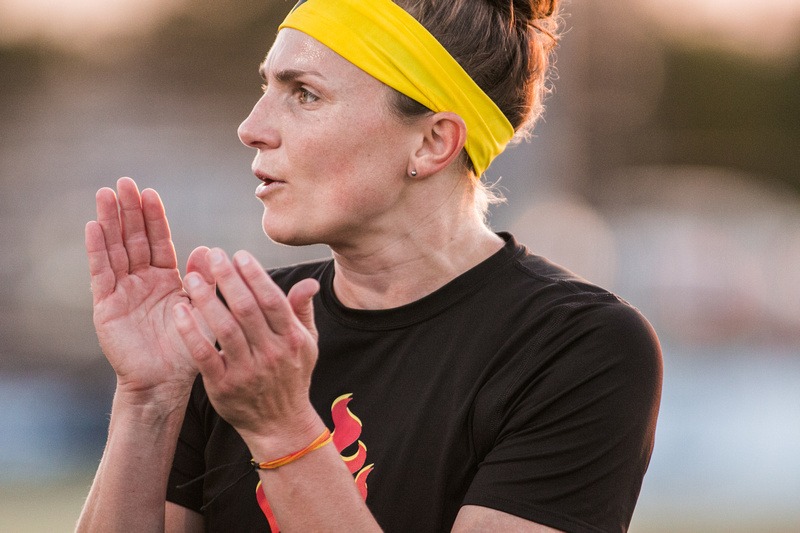
Rohre Titcomb (Seattle, WA)
Rohre Titcomb was a cornerstone of Seattle Riot’s success from 2010 through 2016, pairing elite athletic performance with exceptional leadership. A Seattle-area native with a background in overall disc sports, Rohre first started playing ultimate competitively on the east coast at the Hotchkiss School and Dartmouth College. After a season with Boston Brute Squad, she returned to Seattle and spent the next decade with Riot as a player and coach. Over a playing career defined by consistency, her teams reached the national semifinals or better every season, including five appearances in the finals. She captained Riot to two of those national runner-up finishes and led the team to a World Ultimate Club Championship title in 2014, later contributing to another world championship in 2018 as a coach. A standout for Team USA, Titcomb earned gold medals at the 2011 and 2015 World Beach Ultimate Championships and the 2016 World Ultimate and Guts Championships.
Renowned as one of the game’s premier pullers and break-mark specialists, Titcomb anchored Riot’s defensive lines as a handler field marshal, while instilling confidence and belief in those around her. Titcomb was also known for her strategic acumen, especially with defensive adjustments, and for having an uncanny read on her team’s energy and what players needed to perform. She reflected on her career by saying, “I’m grateful to have learned how to build great teams, how to win, how to lose, and how to always focus on what you can control.”
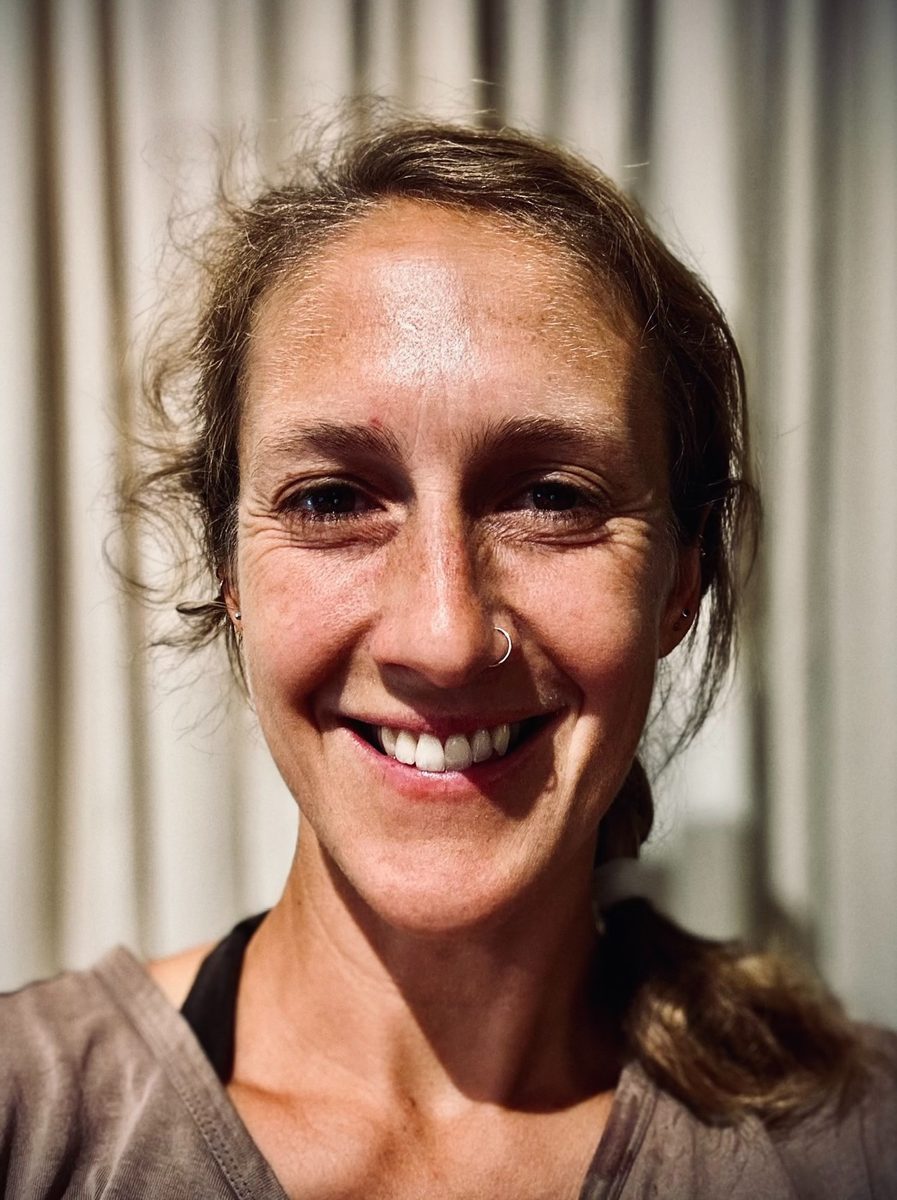
Leila Tunnell (Amherst, MA)
Leila Tunnell was one of the most influential and respected players of her era, renowned for her exceptional throwing skill, field vision, and leadership as a premier center handler. Getting her start at Paideia High School, she then played at both Connecticut College and University of North Carolina, all the while playing club with Atlanta Ozone, Boston Brute Squad, and North Carolina Backhoe. While still in college, Tunnell co-founded Raleigh Phoenix and transformed the new team into a national contender. Moving north again, she was a critical force leading Boston Brute Squad to its first two USA Ultimate Club National Championships in 2015 and 2016. Racking up accolades, Tunnell was the 2011 Callahan Award winner, 2014 Kathy Pufahl Spirit Award winner, and 2015 Ultiworld Club Player of the Year. Selected for Team USA every time she applied, she earned a gold and silver at WJUC in 2004 and 2006, respectively, and then was a key contributor to the gold medal-winning U.S. Women’s National Team in 2016.
Throughout her career, Tunnell was a leading advocate for gender equity in ultimate, embodying the sport’s highest ideals. Consistently admired for her character, Tunnell has helped shape generations of players as a role model for the youth athletes she has coached up and down the east coast for almost two decades.
OPEN DIVISION
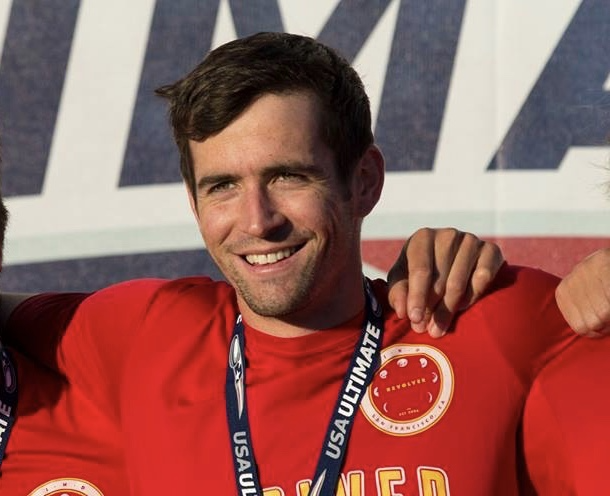
Ashlin Joye (Portland, OR)
Ashlin Joye was the field general at the center of one of the most dominant runs in Open Division history. He joined Revolver in 2009 as a young two-way playmaker, first making his mark on defense with elite range, vertical ability, and the throws to punish a turnover immediately. In 2013, after major roster turnover, Joye moved to the offensive line and assumed control of Revolver’s center-handler role and quickly became the division’s defining quarterback. His command of spacing and tempo, low-turnover decisions, and ability to place hucks and inside breaks into windows few others could see made every part of the field dangerous. Opponents knew his trademark shimmy and inside flick were coming; they still could not take them away.
His dominance was measured in championships as much as aesthetics. With Revolver, Joye won five USA Ultimate titles – 2010, 2011, 2013, 2015, and 2017 – and World Ultimate Club Championships in 2010 and 2018. He also won Open gold with Team USA at the 2012 and 2016 World Ultimate and Guts Championships and was central to the 2013 World Games champions. His best performances came under maximum pressure: quarterbacking a retooled Revolver to the 2013 title, then delivering an upwind huck from the brick mark on double-game point against Truck Stop during the 2015 championship run.
Teammates and coaches described Joye as the best center handler – and perhaps the best thrower – of his era. Yet he remained an instinctive defender after turnovers. The 2015 Peter Farricker Award recognized the combination that defined his career: overwhelming competitive influence, delivered with exemplary Spirit of the Game.

Jeff Graham (Boston, MA)
Jeff Graham was one of the most unguardable initiating cutters of his generation, and his dominance helped reshape Boston’s Open landscape. Beginning with Twisted Metal in the early 2000s, he used an unmatched first step, elite speed, extraordinary endurance, and explosive one-foot leaping to overwhelm defenders of every size. He could win underneath, separate deep, and dominate in the air. Yet he was also skilled enough with the disc – and strong enough defensively – to take over in almost any role.
Graham was the foundational star of Twisted Metal, elevating a young roster to repeated Nationals appearances and helping establish the program’s identity. His presence was central to the merger that produced Boston Ultimate and, ultimately, Ironside. After an ACL injury cost him the 2007 season, he returned in 2008 as Ironside’s primary deep threat and helped the team reach the national final. With Graham as a captain and offensive centerpiece, Ironside added a 2009 semifinal and another final in 2010.
His closing chapter of dominance came in 2016. Returning to Ironside after several seasons away from elite Open club, Graham was again a featured cutter on the team that finally captured Boston’s championship. He was credited with multiple goals and assists in the semifinal, and 5 scores in the final including a toe-the-line catch that completed Ironside’s 14-13 victory.
Teammates described a competitor who elevated everyone around him; opponents remembered a matchup that could be contained, never solved. Both consistently praised his leadership, composure, and Spirit of the Game.
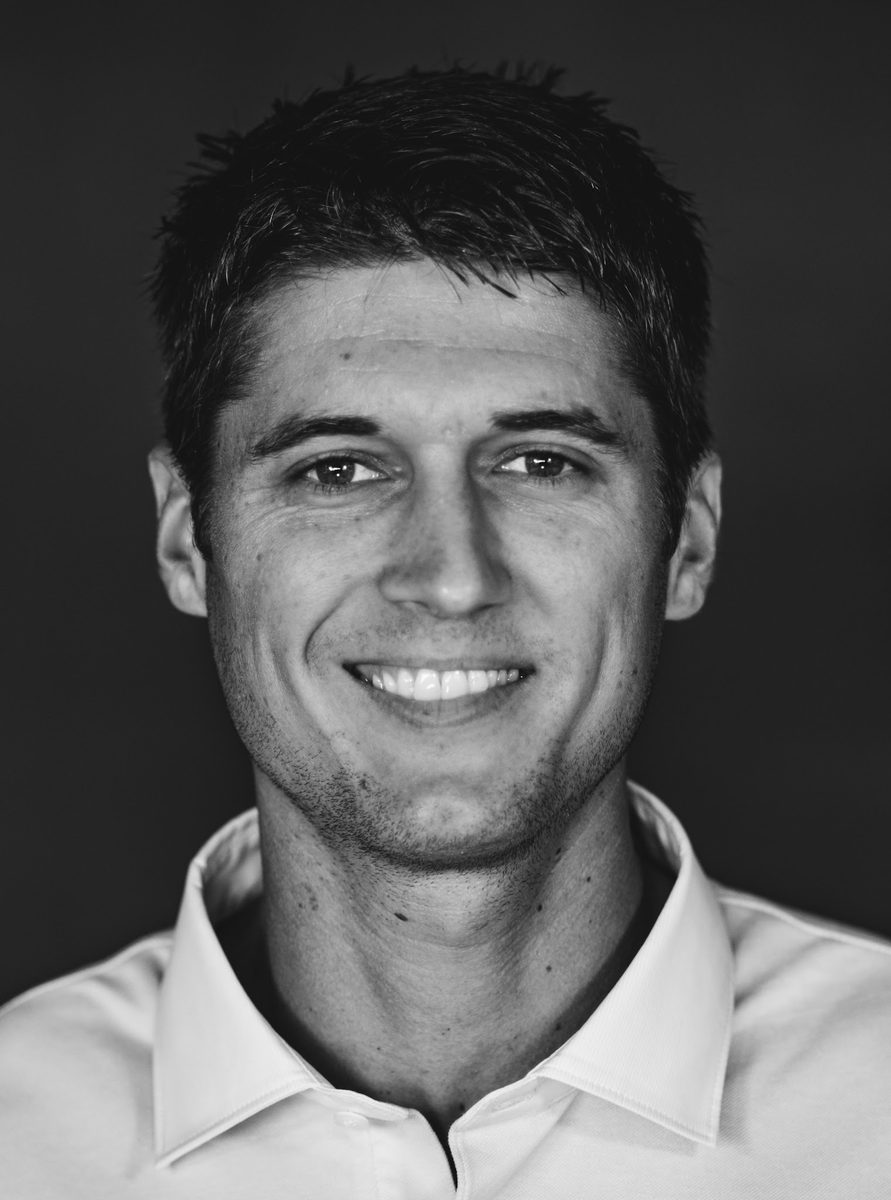
Mac Taylor (Oakland, CA)
Mac Taylor was a prototype of the modern ultimate player: a shutdown defender with the size to challenge deep threats, the quickness to pressure handlers, and the skill to become the first option after a turnover. At Colorado, he helped Mamabird reach three national finals and finished second in Callahan Award voting before joining Johnny Bravo and Revolver.
During Revolver’s rise from 2009 through 2013, Taylor was the answer to nearly any defensive problem. He routinely drew an opponent’s most dangerous player. His closing speed and leaping generated blocks, while his positioning forced elite cutters out of their preferred space. On the turn, Taylor became an initiating cutter and aggressive playmaker, combining break throws and powerful hucks with the ability to win downfield. Teammates called him a five-tool player, with elite throwing, footwork, marking, athleticism, and field awareness.
Taylor’s peak coincided with one of the sport’s great dynasties. Revolver reached the USA Ultimate final in five consecutive seasons, winning championships in 2010, 2011, and 2013, and captured the 2010 World Ultimate Club Championship. Taylor added a 2012 WUGC Open gold and reached his summit in 2013, winning both the USA Ultimate title and World Games gold. At the World Games, he played most of Team USA’s defensive points and produced blocks and denials against the world’s best, including Japan’s Masahiro Matsuno.
Taylor’s quiet intensity made his dominance easy to underestimate. His signature was versatility under pressure: erase the opponent’s best player, then become one of the most dangerous players on the field with the disc.
MIXED DIVISION
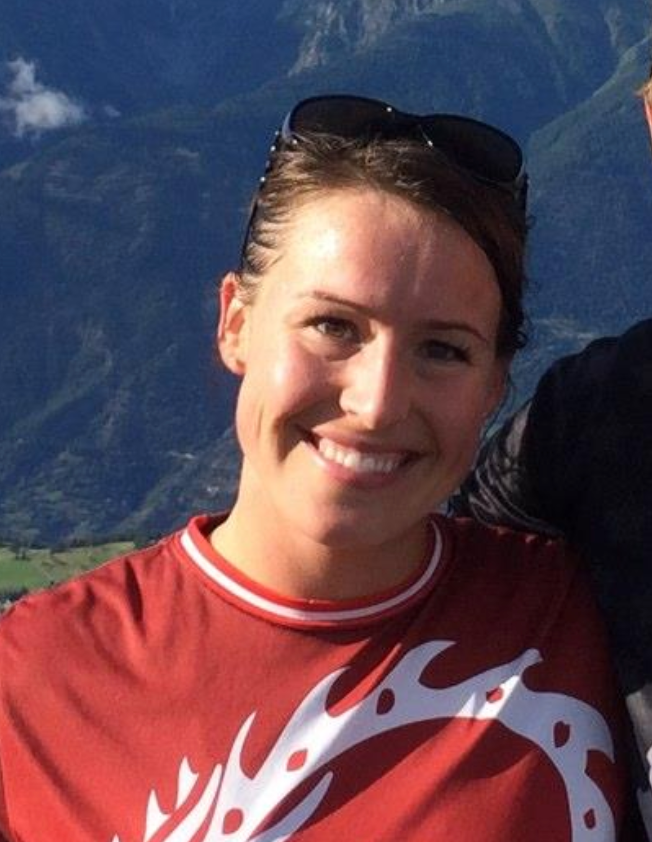
Alicia Carr (Inver Grove Heights, MN)
Alicia Carr has been a defining presence in Minneapolis ultimate for more than two decades. A game-changing presence in the handler space for Minneapolis-area Mixed teams, Alicia was a powerful thrower and relentless defender who moved fluidly between offensive and defensive handler roles, breaking marks and converting on turnovers. She was a major contributor throughout Drag’n Thrust’s seasons, helping the team win back to back national titles in 2013 and 2014 and the 2014 World Club Championship, while also captaining the program during its early years.
She later continued her success in the Masters and Grand Masters divisions, captaining Surly C.O.U.G.A.R.S. to consecutive national titles, earning selection to the WBUC Women’s Grand Masters Team USA, which went on to win gold, and helping Surly GMX win back to back Grand Masters World Championships in 2024 and 2026.
Across more than 20 years of elite competition, Alicia’s combination of skill, competitiveness, leadership, and longevity has made her a standout figure in Minnesota ultimate.

Josh ‘Shwa’ Hemmesch (Minneapolis, MN)
Josh ‘Shwa’ Hemmesch was a driving force behind the rise of Minneapolis Mixed Ultimate, captaining Flaming Moe, Alpha Cobra Squadron, and Drag’n Thrust across more than a decade at the sport’s highest level. An athletic, do-everything player who moved seamlessly between the handler and cutter spaces, Shwa set the vision that turned Drag’n Thrust from a middle-of-the-pack contender into a three-peat national champion. He captained the team to its breakthrough 2013 title, helped the team navigate the vaunted double peak of World and Club Championships in 2014, and remained a steadying presence through its third straight national title in 2015.
Shwa’s competitive excellence has carried well beyond his club peak. He captained Surly to a Masters National Championship in 2018, won WBUC gold with Team USA Mixed Masters in 2017 and Grand Masters in 2025, and continues to podium in Grand Masters play, winning gold at both USAU Beach Championships and WMUCC in 2026. His leadership off the field has been equally impactful. He served as Drag’n Thrust’s general manager, coached the program to a top-three Nationals finish while winning Club Mixed Coach of the Year runner-up honors in 2022, led a Minnesota high school team to a state title, and has worked as a USAU-certified observer since 2015 – clearly cementing his legacy as both a champion and a builder of the Mixed Division.

James Hron (Minneapolis, MN)
James Hron was one of the greatest male-matching deep threats in the Mixed Division during the 2010’s, if not its entire history. Combining size and speed with soft hands and a strong field sense, Hron anchored Drag’n Thrust’s back-to-back National Championships in 2013 and 2014 and its 2014 World Championship. He evolved from a defensive stopper early in his career into a primary cutter who opened the deep space for his teammates, consistently delivering when it mattered most. He was the only male-matching Mixed player invited to a 2013 World Games tryout, a testament to his standing among the division’s best during that championship run.
As team captain in 2014, Hron guided Drag’n Thrust through a demanding double-peak season that produced both the WUCC and USAU titles, while the squad also captured the Spirit Award at Nationals – a fitting reflection of a player who teammates and opponents alike describe as a paragon of integrity and humor. Beyond the numbers, Hron built a reputation across the division as an even-keeled, universally respected competitor, the kind of steady, positive presence who lifted up teammates and earned the admiration of the very opponents tasked with covering him. Hron returned to the Drag’n Thrust roster in 2018 and 2019 to help develop the next generation of talent, and he remains active in the Mixed Masters Division today, having captained Drag’n Rust from 2022 to 2025.

Sean Murray (Morristown, NJ)
For more than a decade, Sean Murray was one of the most versatile and dangerous cutters in the Mixed Division, starring for five different Nationals-caliber Mixed programs across his career, including AMP, Metro North, and Superlame. An agile 6’4″ playmaker, Murray served as a primary cutter, an elite puller, and a prolific scorer, highlighted by a nine-goal-or-assist performance in the 2007 Nationals semifinals and an appearance on ESPN’s SportsCenter Top 10. He was equally willing to distribute the disc to female- and male-matching teammates alike, under or deep, forcing defenses to guard the entire field. Proving his impact wasn’t tied to one roster or one role, he captained a non-practicing Termite’s Entourage team to a Nationals berth in 2011, and later helped carry a talented Metro North to a runner-up finish at 2016 Nationals.
Just as central to Murray’s legacy is the Spirit he brought to every level of competition. Teammates and opponents alike describe him as a player who brought out the best in everyone, all while remaining one of the toughest matchups in the division. That same combination of talent, motor, and character has transferred to the Masters ranks, where he won back-to-back WUBC Mixed Masters world titles with Team USA in 2015 and 2017 and a Men’s Masters World silver medal in 2018, capping a career defined as much by how he played as by what he won.
2026 Vetting Committee:
- Suzanne Fields (Chair, HoF Vetting Committee) – HoF Inaugural Class of ‘04
- Bart Watson (Open Peer Co-lead) – HoF Class of ‘22
- Jim Parinella (Open Peer Co-lead) – HoF Class of ’14
- Greg Husak (Open Peer Co-lead) – HoF Class of ’18
- Alex Ghesquiere (Open Peer Co-lead) – HoF Class of ‘25
- Kurt Gibson (Open Peer Co-lead) – HoF Class of ‘25
- Gwen Ambler (Women’s Division Peer Co-lead) HoF Class ’21
- Katey Forth (Women’s Division Peer Co-lead) HoF Class of ‘21
- Carolyn Finney (Women’s Division Peer Co-lead) HoF Class of ‘25
- Kendra Frederick (Mixed Division Co-lead) – HoF Class of ’23
- Emily Smith-Wilson (Mixed Division Co-lead) – HoF Class of ‘22
- Kevin Seiler (Mixed Division Co-lead) – HoF Class of ‘23
- Henry Thorne (Contributor lead) – HoF Class of ‘24
- David Barkan (Contributors) – HoF Class of ‘10
####